
Our Context
In 2018 or thereabouts, my manager asked to review some of the short, online lessons from the EduHack project, and after sifting through some of them, I landed on a lesson about creating digital resources using H5P. I became fixated on H5P. At the time, we had just finished leading the All Aboard project, which produced open, interactive lessons on a variety of technologies where users could receive digital badges for completion. Those resources were mostly devloped in Storyline, and some in Rise toward the end to save time. I was conscious that those licenses are expensive, Storyline requires some training, and while Rise is simple to author with, it’s still part of a pricier package. I decided to explore H5P in more depth, authoring in H5P.org, installing the plugin on my own WordPress site, and ultimately requesting a pilot period from the company for H5P.com service that would integrate via an LTI with Blackboard Learn. I decided that for our staff and students, it was best to integrate the tool properly. It would be too much to ask staff to author elsewhere, create accounts, etc. From my testing, I also discovered that H5P allowed users to publish fully open or shared content in Blackboard, content could be easily CC licensed, and files were easily downloadable for reuse elsewhere. I was now determined to ‘open the closed‘.
In 2019, the national project I was working on afforded me the chance to facilitate a pilot on digital resources with our staff, and I initially had about 20 participants authoring with H5P and some other tools. Of course, by spring of 2020, the world changed and we went from pilot to mainstream. We purchased a site license in the summer of 2020 and I facilitated learning design workshops multiple times a week for months to help staff remix existing or new learning materials into asychronous online activities. Given the situation, I had to focus on getting materials ready for students, and only focus on open practice with staff that had the capacity or interest to engage.
Given the emergency period, and that I was supporting this work on my own, I haven’t had much time to critically reflect on H5P as a tool beyond my initial work. This might be my first opportunity to tease some issues out, which is useful. I believe that my early approach was pragmatic and well-intentioned, but I had only set out to support small numbers of staff to design well, now we have 260-something authors, which is a bit beyond my control!
Affordances
Broadly, affordance refers to the range of functions and constraints that an object provides for, and places upon, structurally situated subjects.
(David and Chouinard, 2016)
While I still believe that H5P is a tool that should be available for all staff at our institution, I do think it’s useful and necessary to examine its affordances. I shared my experience in the forums, and it was interesting to hear from others and their focus on good design. I should also note in this post I intend to focus on a variety of content types, of which there are many.
Request: H5P requests quite a bit of input from authors, depending on the content type. There is no ability to rapidly prototype or preview content, or avail of templates when authoring. Open content can be reused or remixed, but this would require further editing and the application of a new license. To author from sratch, the user must input text, images, videos, etc. in order to create learning materials. There are required fields that must have content before an item could be saved or previewed. It does prompt the author to input alt text and copyright information on images, for instance, but that isn’t essential to move on. These requests don’t create a barrier to authoring necessarily, they really insist that the author is prepared.
Demand: Initially, the most obvious demand was the our users had to author in Blackboard, which was welcome for most as it meant there was no need to create external accounts or upload materials, everything could be authored and popped into Blackboard relatively easily. However, over time, I began to notice that some staff hate being in Blackboard in general, so the advent of the open-source LUMI authoring tool has been a gamechanger. Apologies for discussing multiple tools here, but I’m approaching H5P as an interactive content ecosystem here more than a singular tool. LUMI allows our authors to create content offline, and simply upload the files to Blackboard. In some cases, it has allowed users to use beta content types and publish them as SCORM or HTML if they are not yet available in H5P.com. In my own teaching, this workaround has been helpful for those working on more extensive H5P projects. It affords a flexibility that authoring through the normal route does not.
Encourage: As previously noted, H5P does prompt accessible design and coppyright licensing. It also promotes open practice through its OER hub, and provides a wide variety of learning activities for both staff and students. See some of the screenshots below for some features that prompt the author to consider licensing, sharing, and accessibility standards.


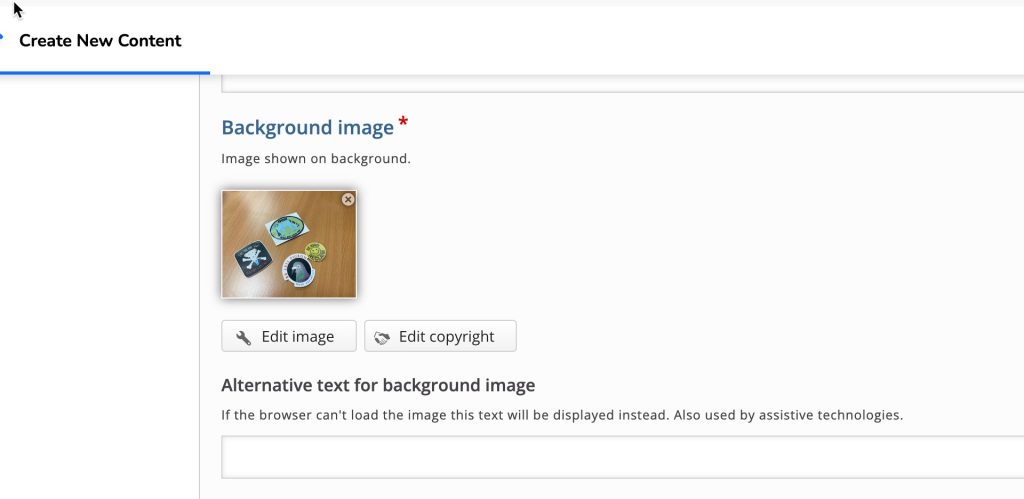
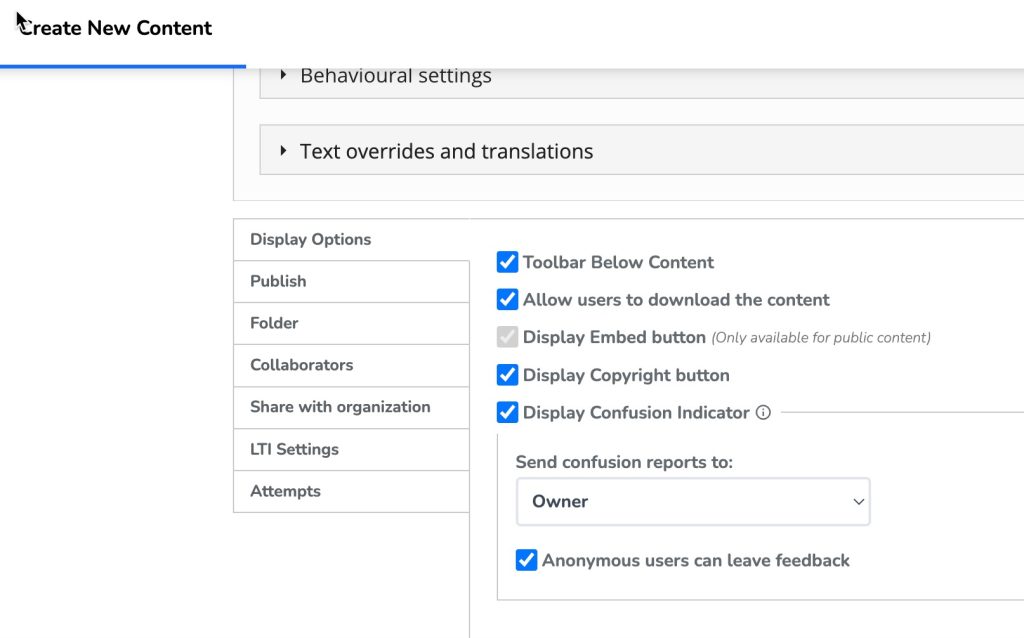
Discourage: While I would generally say that H5P removes technical barriers for authors, it also limits what an author can achieve without sufficient design training. While the simpler content types might be achieveable, creating a truly immersive, interactive experience like a branching scenario or virtual tour would require too much customisation and underestaind of the design process. There is also a limit on agency (to some extent) unless the user is particularly savvy. Being time or training poor would definitely be a barrier for some authors, and could ultimately create a poor student experience.
Refuse: One of the most frustrating aspects of the H5P content types is that shorter activities can’t be stacked into one larger course or lesson. For instance, if some of our staff author a series of short interactive videos, but want to put them all together into one more coherent interactive book or course presentation so students can access them in one place, they cannot do so. It would require the author to duplicate the same process in a different content type. This can come as a huge disappointment, so I am careful to remind our authors to think about how content is ultimately delivered to students. This is a limitation that the technology outright refuses to do something that most users might assume it could.
When artifacts request, demand, encourage, discourage, and refuse, those artifacts push, pull, and adapt to subjects with varying degrees of intensity. While requests and demands place bids upon subjects, artifacts encourage, discourage, and refuse based upon subjects’ wishes. Allow is distinct in its neutral intensity and multidirectional application. Artifacts allow by remaining indifferent to if and/or how a particular feature is used, and to what outcome. Allow applies to bids generated by both artifacts and subjects.
(David and Chouinard, 2016)
Allow: This a concept I’ve struggled with this week, admittedly. I feel as though I could contradict my earlier thoughts here. In the forums, others have pointed out a lack of customisation availble through H5P, and to an extent I agree, but I also have to examine what it does allow. While it’s not the most refined authoring tool, there is certainly freedom to customise in terms of colour palettes, multimedia use, and navigation. Yes, it will undoubtedly refuse to do some aspects of what the user bids, but I believe it affords authors a chance to start authoring, and start from an ethical, practical place. The skills gained and ability to share and reuse content more widely, in my opinion, outweighs any of its pitfalls or barriers. It will ultimately help staff to accquire a new digital skill, and consider broader issues like accessibility, open practice, and licensing. It also gives staff an opportunity to download and reuse their content elswhere. In particular, I was concerned with precarious staff that put some much effort into their teaching. I’ve often noticed users put so much effort into authoring materials that they cannot take with them or use if they move on to new employment, or even if a pricey license runs out. I wanted the skills and content to be transferable.
For whom and under what circumstances: With all interactive multimedia application, I have concerns about behavioursim and poor design. I teach a Learning Technologies module for our staff, and in the last class, after all our work creating content, we cover Skinner and Audrey Watters as a counterpoint to all we’ve covered. It always makes for a really interesting discussion as they examine the teaching machine and consider the materials they are developing. I believe it helps them to be more conscious of their design process, and considerate of the student experience.
Perception: This is another area of concern for me. I have seen our staff authors become comfortable with one or two content types and just a few interactions, and this limits the tools possibilities, and creates a poor user experience. Because there are so many options, I think our staff are just not aware of some, and don’t make good choices based on this lack of perception.
Dexterity: I similarly have concerns about dexterity. While it’sless onerous than tools like Storyline, authoring requires significant effort. While H5p is clear about the accessibility aspects for the end users, I worry about creating multimedia content in general. How accessible is authoring for our staff? I can navigate with my mouse and a screenreader quite well, but the work still require a lot of screentime and effort, which could be a proven barrier for some users.
Final thoughts: While I’m proud to have led this work at our university, and we have made great strides (see this project for more) and still stand by my decisions and approach to implementing H5P, focusing on it through the lens of affordances has been helpful. It’s finally given me a space to reflect on things, and as previously outlined, I do have concerns for both our staff and student users. However, from what I’ve teased out, I believe I can also refine my training, teaching, etc. to highlight some of these issues. I’ve always been clear in my work that I don’t believe in evangilising any theory/tool/approach, and I stand by that.


I really like how you are rooting this blog in your own professional context and experience – do keep this up. Not only will you find this useful it also demonstrates deeper understanding of concepts to me, as your tutor, if you can ‘apply’ things to concrete examples rather than simply discuss in the abstract. Good use of multimodality.
You have a lovely personal voice which makes your blog posts engaging to read. However, be careful not to let this lead you into too much narrative and description, rather than analysis. The formal blog task posts (you can do additional posts around them) do require academic writing skills and critical and evaluative skills.
I think this post provides ample evidence that you are able to understand and use the lexicon of affordances. However, it could have focused more on the educational implications and benefits of the affordances of HP5 for tutors and students. For example, this sort of comment could have usefully been expanded:
“It also promotes open practice through its OER hub, and provides a wide variety of learning activities for both staff and students.”
More detail needed here for example:
‘There is also a limit on agency (to some extent) unless the user is particularly savvy’
This sort of evaluative critique would provide more evidence of your knowledge and understanding of the concept of affordances in relation to education.
Further down, I wasn’t sure of the point you were making re affordances and behaviourism (Skinner video) – could you explain a little more what you think the link is?
Academic writing and formatting
1. Try to have hyperlinks opening in a new window if possible, to save your reader having to use the back arrow to your post.
2. If you mention specialist resources, games etc such as Storyline you need to hyperlink to an explanation or include a footnote for your reader. I have no idea what Rise or Storyline are – you are assuming a level of background knowledge of your field which readers may not have – even digtal ed tutors!!
3. Was the image ‘H5P content types’ supposed to be an embedded video? It didn’t seem to work or show anything?
Apologies for the lack of focus on the educational implications and benefits of the affordances of H5P. I’m conscious that I’ve been talking about H5P for *so* long now that there’s likely a lot of missing context in my written word because it’s all been rattling around in my head for so long now! I will focus on the refs and links, that was a complete oversight. I’m going to follow this up with a short explanatory post to expand on those comments.