
Apologies for the lack of critical reflection in my previous post, one of the issues I have with H5P is that I’ve more or less been the sole person behind it at the university since 2019. I was responsible for the pilot, procurement, testing, documentation, training, and learning design workshops (ABC). It’s all been rattling around in my head for so long that I find it hard to step back and be critical. I’m going to address some of the comments in this post to flesh out some of my thoughts.
H5P is a technology based on HTML5 and it’s primarily used in education to create interactive learning activities. This is a link to the nearly 40 H5P content types, apologies that the embed didn’t work in the previous post. You can see the wide range of activities available, from simple things like an image with hotspots that might only take a few minutes to build, to interactive books that could take some time to create, but support students to cover entire units/weeks/chapters/topics. Most commonly, it’s used as a plug-in on a variety of platforms, or hosted via H5P.com.
I wanted to move us from this kind of student experience of working through course materials (images from Blackboard’s student help pages)…
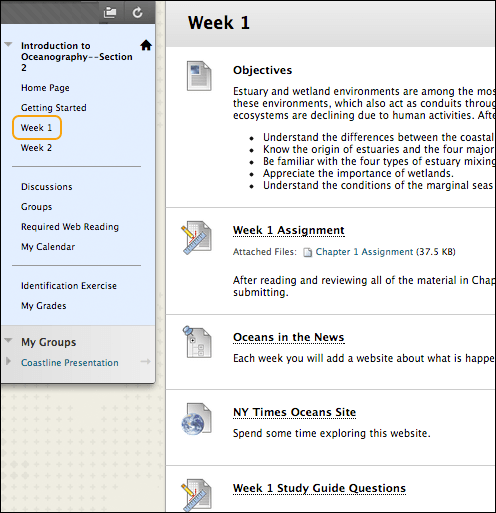
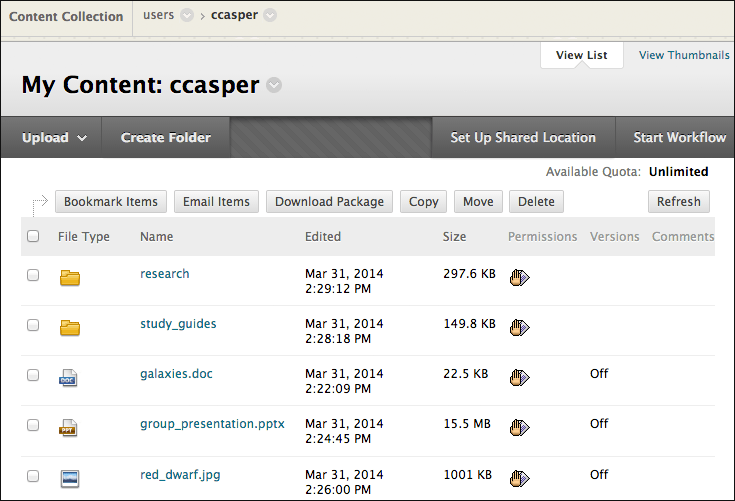
…to this easily navigable, interactive content type where lecturers could remix their notes, links, images, videos, etc. using learning design principles to create a more engaging, useful experience:
Apologies for not sourcing content authored locally, this is an open example from H5P. I didn’t want to bother our staff at this point of the semester to get access! This interactive book is a nice example of rich multimedia, chunked into short chapters, with opportunities to check for understanding and progress.
Structuring learning materials in such a way, even if designing a short review activity or a summary of a week/topic, encourages a student to interact with the course content in a more meaningful way. Students can repeatedly check their understanding in a low-stakes environment.
From 2020 – 2021, I employed a student intern as part of the local project work (we had a larger-scale intern scheme that worked so well). She was a fourth-year medical student at the time. We partnered on all of my workshops, training, and teaching. Her insight was particularly useful when it came to course design. She would explain to staff that most of her learning took place in jumbled folders containing links, podcasts, videos, PPTs, notes, readings, etc. with very little direction on what to do/how long to spend on each item/what the purpose was/and no chance to check for understanding. She noted that as a medical student, and an obvious high-achiever, she worried for students that struggled with organisation and time-management, students who were first-gen university students, or English-language learners. She could make sense of the jumble, which we started calling a scavenger hunt, which H5P has served to counteract by affording instructors to add a more coherent narrative to their learning materials.
The concept of affordance holds a prominent place across disciplines. This is well deserved, as the concept maintains an important analytic role, navigating the tenuous space between subject agency and technological efficacy.
(Halford and Savage, 246)
Conversely, I’ve had some concerns about poorly designed activities. For our academic staff to design high-quality interactive content (like the sample activity above, there is a need for some design skills. In the activity above, there are high-quality images, graphic elements based on a consistent colour palette, and careful attention to the types and varieties of interactions used. I believe that the affordances offered by H5P exist in that space between agency and efficacy. Authors must contribute more than their content knowledge. They must apply UX design and learning design principles to create activities, otherwise the efficacy is diminished for students. However, I continue to support H5P as a liberating middle-ground between the drudgery of rows of VLE folders and the even more intricate authoring tools such as Articulate Storyline.
H5P is a technology used by many open practitioners due to its open-source roots, user community, and ability to reuse across platforms (particularly the textbook platform, PressBooks). Recently, H5P released an in-built OER Hub for users to find, reuse, and remix content in the same dashboard where they would build content. This encourages users to further consider sharing, licensing, and open practice; which builds on other sharing and collaboration options. While the VLE, in nature, tends to close off learning materials from colleagues, H5P encourages staff to consider sharing options and explore open resources.
I’ve also considered the affordances relating to co-creation and partnership, but we don’t have licenses for student authors. I did manage to support one specific staff-student authoring project in the last few years, but this was under the radar as we don’t have the licenses. Students could now avail of LUMI to share their files with academic partners to share on our server, so that’s a potential workaround.
In my last post, I made a glib reference to Skinner’s teaching machines. During our semester, I teach academic staff about audio, video, interactive multimedia, open education, and assessment. Each week, they are creating an artifact and write reflective blog posts linked to each topic. Our final session is an admitted ‘mop up’ of loose ends, project discussion, a MakerSpace show-and-tell, and finally, a bit of reflection with Skinner. We don’t get into too much (they do read some Audrey Watters in the lead-up), I use the discussion to point out the similarities between creating interactive content and the student pecking away on a teaching machine. We explore the differences between genuine engagement vs. aimless clicking.
We talk about the potential and drawbacks of interactions, and what can be gained or potentially stifled pedagogically. We also consider the impact of gamification. In simple activities, are students working through multiple times just to get the correct answers, or to be seen in the analytics as completing the activity? If questions are too basic, or in the wrong place, is it worth students clicking through?
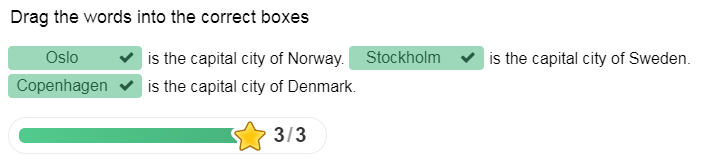
We compare this act to the student working on a teaching machine. As I’ve said previously, this is a surface-level dive at best, but it helps the class reflect on the progress of technology, and its promise (look at that smiling student!). Generally, they go away wanting to create more thoughtfully planned, meaningful activities that provide students with another, additional way to engage with learning materials.


Very interesting elaboration of your original post Kate. I particularly liked the phrase ‘…affording instructors to add a more coherent narrative to their learning materials.’ I’m very interested in narrative as engagement, and we’ll talk more about that as we go. I notice you mention gamification – I think you might find this article about affordances in gaming very enlightening- it’s an easy read:
LINK
https://bit.ly/3jJjrQq
Linderoth, J., 2012. Why gamers don’t learn more: An ecological approach to games as learning environments. Journal of Gaming & Virtual Worlds, 4(1), pp.45-62.